


Vaginal Reflexology and Foot Reflexology: What’s the Difference?
Vaginal Reflexology vs Foot Reflexology.
If you already know foot reflexology, vaginal reflexology may feel familiar and completely different at the same time. Both practices work from a mapping idea, but where that idea is applied, how it is explored, and what a session invites you to notice are not the same. If you are curious about the vaginal reflexology offering, this guide explores the distinction in clear, non-judgemental language.
When comparing vaginal reflexology vs foot reflexology, consider which approach feels right for your goals. Vaginal reflexology vs foot reflexology can offer different ways to notice body signals. Your practitioner can explain how vaginal reflexology vs foot reflexology sessions differ. Learning about vaginal reflexology vs foot reflexology can help you choose an informed next step.
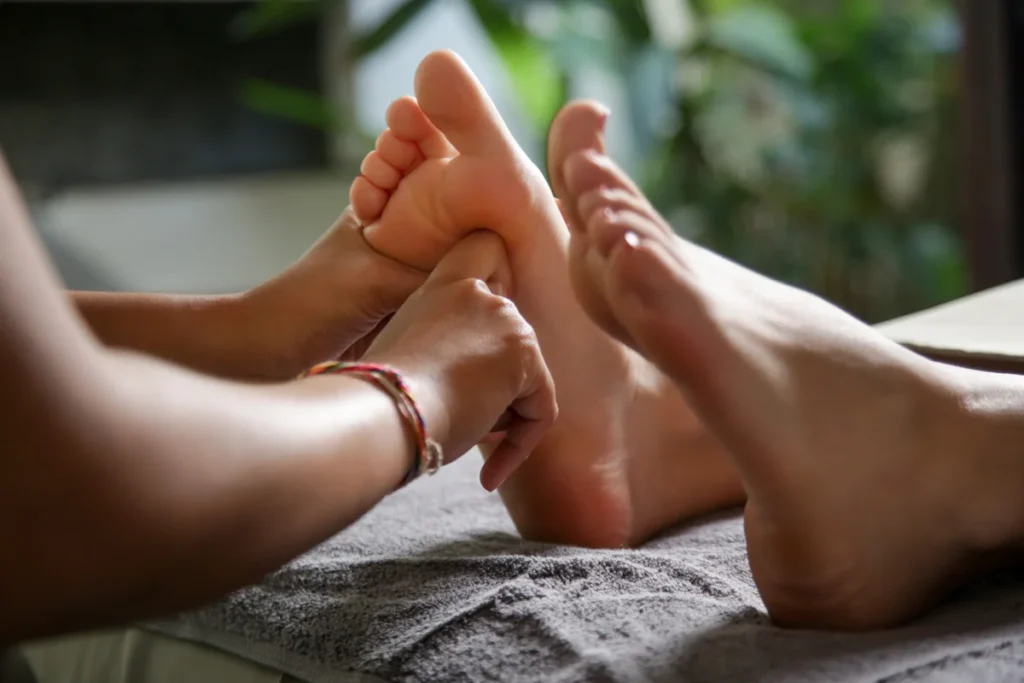
Vaginal reflexology vs foot reflexology differs in where the mapping is applied. Foot reflexology works with the soles of the feet. Different zones across the foot are traditionally mapped to organs and systems, and gentle pressure may support relaxation and a general sense of wellbeing. It is external and familiar: you lie back, someone works with your feet, and you can take time to notice how your body responds.
Choosing between vaginal reflexology vs foot reflexology depends on your comfort, goals, and consent. Vaginal reflexology applies a similar mapping principle to internal pelvic tissue. That does not make it a medical examination or a replacement for clinical care. It is a private, consent-led wellbeing practice that explores body awareness, sensation, and the relationship a person has with their pelvic area.
The First Difference
The first difference is what the session is reaching. The pelvis can hold patterns of tension, bracing, numbness, or disconnection that feel different from sensations in the feet. Foot reflexology can be calming and grounding, while vaginal reflexology focuses on a more intimate area and may help someone notice what their body has been communicating. Neither practice is better; they simply have different purposes.
The Emotional and Nervous System Difference
Because the pelvic floor sits close to how the body registers safety, pelvic work can bring up emotional responses as well as physical sensations. This is why the approach must be trauma-informed and consent-led from the first conversation. Nothing is rushed, and nothing happens without clear, ongoing agreement. You remain informed and in control of the pace, and you can pause or stop at any time. For more context on a values-led approach, you can learn about the practitioner and the work.
The Purpose and Pace of a Session
Foot reflexology is often chosen for rest, relaxation, or general wellbeing. Vaginal reflexology may appeal to someone who wants to explore pain, numbness, disconnection, or a feeling that something in their body has gone quiet. The aim is not a quick fix or a promise of a particular outcome. It is a supported opportunity to listen, ask questions, and build a more compassionate relationship with your body.
How the Sessions Differ
A foot reflexology appointment is external and may need little preparation. A vaginal reflexology session starts more slowly, with time to talk through what is happening, what you want from the session, and what your boundaries are. Any internal work is discussed beforehand and only takes place with explicit consent. Your lived experience matters more than a rigid treatment plan.
Different Practices, Different Purposes
These practices do not need to compete. Foot reflexology can offer a gentle way to pause and reconnect with the body. Vaginal reflexology offers a different kind of exploration for adults who feel ready to approach pelvic awareness with privacy, choice, and care. You can browse the Journal for more reflections on pelvic wellbeing, or take a low-pressure discovery call to ask whether this approach feels right for you.
It is also important to know your normal. New, persistent, or worrying symptoms deserve appropriate medical attention. Vaginal reflexology does not diagnose or treat medical conditions and does not replace a GP, gynaecologist, pelvic health physiotherapist, or urgent care.
Frequently Asked Questions
How is vaginal reflexology different from foot reflexology?
Foot reflexology works with points on the feet, while vaginal reflexology explores reflex points associated with internal vaginal tissue. They share a mapping idea, but differ in location, privacy, pace, and consent. Both can be approached as complementary wellbeing practices, without claiming to cure or diagnose anything.
What does a vaginal reflexology session involve?
A session is based online in the comfort of your own home, private and trauma-informed. It begins with conversation about your intentions, questions, and boundaries. You stay in control of what happens, and any internal work you do yourself. The work is exploratory and does not diagnose a medical condition.
Who is vaginal reflexology for?
It may suit adults who want to understand their pelvic area with more awareness, including people noticing changes in sensation, tension, or connection. You do not have to arrive with a perfect explanation. You can bring questions, go slowly, and decide what feels appropriate for you. Speak with a qualified clinician about symptoms or concerns.
Can vaginal reflexology replace medical care?
No. It is a complementary, consent-led wellbeing practice that support’s body awareness; it does not replace medical assessment, treatment, medication, or urgent care. You deserve both compassionate support and appropriate healthcare when you need it.
Vaginal reflexology vs foot reflexology can support informed choices.
When comparing vaginal reflexology vs foot reflexology, consider which approach feels right for your goals. Learning about vaginal reflexology vs foot reflexology can help you choose an informed next step.
To book in for a free discovery call click here
Vaginal reflexology is an educational practice for body awareness, self-care, and emotional wellbeing. Pelvic energy supports grounded body awareness in everyday life, while pelvic energy practices can complement gentle self-care and help you reflect on pelvic energy without replacing medical advice.

